
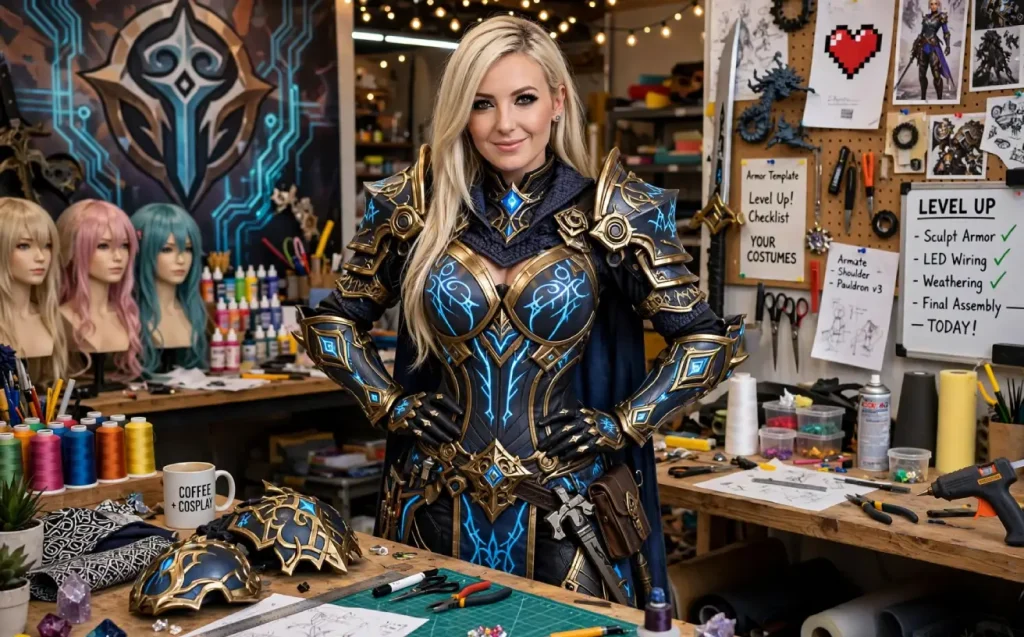
Step into any major gaming convention, and you will instantly witness the staggering evolution of cosplay. What used to be simple cardboard cutouts and closet-assembled costumes has transformed into a high-tech, multidisciplinary art form involving advanced EVA foam fabrication, 3D printing, animatronics, and cinematic makeup.
At the forefront of this creative revolution for over a decade is global cosplay icon Jessica Nigri. Known for bringing larger-than-life video game characters—from Overwatch and Elden Ring to Cyberpunk and The Mandalorian—to breathtaking reality, she has mastered the intersection of engineering, craftsmanship, and performance.
Leveling up your costume design game requires a look inside the ultimate guide to gaming cosplay mastery inspired by industry veterans like Jessica Nigri.
1. Mastering Materials: Moving Beyond Cardboard
The foundation of any elite armor or prop build lies in choosing the right materials. Gone are the days when costumes fell apart halfway through a convention day.
- EVA Foam is King: For lightweight, durable armor, gauntlets, and pauldrons, high-density EVA foam (available in various thicknesses) is your best friend. It can be cut, heated with a heat gun, curved, and glued into complex organic shapes.
- Worbla and Thermoplastics: Thermoplastics become moldable when heated, allowing you to wrap them around foam bases or sculpt intricate, rigid fantasy details that hold their shape under pressure.
- 3D Printing Integration: Modern gaming armor features complex geometric contours that are nearly impossible to carve by hand. Combining 3D-printed components with foam bases gives you clean, professional-grade edges and intricate prop replication.
2. Engineering Big Builds: Wings, Mechs, and Animatronics
The hallmark of a jaw-dropping gaming cosplay is movement and scale. Characters frequently feature massive mechanical wings, glowing plasma swords, or floating elements that defy gravity.
- Internal Support Structures: Big builds like Overwatch Mercy wings or heavy armor sets require hidden structural integrity. Utilizing lightweight PVC piping, aluminum rods, or thermoplastic back-harnesses distributes weight evenly across your shoulders and hips, saving your posture during long convention hours.
- Balancing Act: Always build inward and upward. Keep the heaviest parts of a prop centered close to your body’s core to prevent strain and maintain balance while walking through crowded convention halls.
- Incorporating Electronics: LEDs, micro-controllers, and hidden battery packs bring weapons and armor to life. Embedding simple string lights or custom EL wire into clear resin prints adds that distinct sci-fi glow seen in modern AAA video games.
3. Patterning and Proportions
Even the most expensive materials will look messy if the proportions are off. Gaming character designs often feature exaggerated anatomy, giant pauldrons, or impossible waistlines.
- Scale to Your Body: Translate ingame concept art to your specific height and frame. Creating mockups out of cheap craft foam or newspaper (often called “foamboarding” or prototyping) lets you test the fit before cutting into expensive materials.
- Use Trusted Blueprints: Take advantage of digital pattern makers and community resources. Scaling down complex prop blueprints ensures your pieces look symmetrical and clean.
4. Paint and Weathering: Selling the Illusion
Freshly painted foam looks like… well, foam. The secret to making a costume look like it was pulled straight out of a battle-scarred video game universe is the weathering process.
- Base Coats and Primers: Always seal your EVA foam with multiple layers of flexible primer (like wood glue, PlastiDip, or specialized foam sealants) before painting to prevent the foam from soaking up your paint.
- The Magic of Blackwashing: Apply a heavily diluted black or dark brown acrylic wash over metallic silver or gold paint, then quickly wipe it away. The dark pigment settles into crevices, simulating years of dirt, grime, and battle wear.
- Edge Highlighting: Use a dry brush with a lighter metallic paint along the edges and corners of your armor to create the illusion of chipped paint and worn steel.
Bringing Your Character to Life
Cosplay is ultimately about performance and passion. Crafting a brilliant costume is a massive achievement, but stepping into character—whether you are nailing a stoic pose for photographers or interacting with fans on the convention floor—is where the magic truly happens.
Take your time, embrace the inevitable trial and error of crafting, and don’t be afraid to tackle ambitious builds piece by piece.
Leave a Reply